The Ultimate Guide to Top Hammer Drill Rods: Maximizing Drilling Efficiency
In the demanding worlds of mining, quarrying, and construction, efficiency is everything. The ability to drill faster, straighter, and with less downtime directly impacts the bottom line. At the heart of this process for many operations is a critical component: the top hammer drill rod.
This guide provides a comprehensive overview of top hammer drill rods, explaining what they are, how they work, and how to choose the right one for your project to optimize performance and reduce costs.
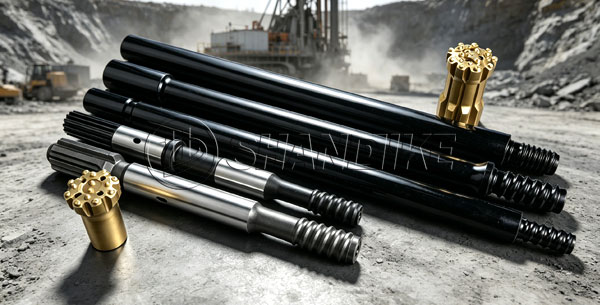
What is a Top Hammer Drill Rod?
A top hammer drill rod is a key component of a top hammer drilling system. Its primary function is to efficiently transmit impact energy and rotational torque from the rock drill (the hammer) to the drill bit at the bottom of the hole.
The working principle is straightforward yet powerful: a piston in the rock drill delivers a percussive force, often 2,000 to 5,000 blows per minute, onto the shank adapter. This energy is then transferred through the drill rod to the bit, which fractures the rock. The rod also provides the necessary rotation to ensure the bit cuts into fresh rock and that the cuttings are flushed up and out of the hole.
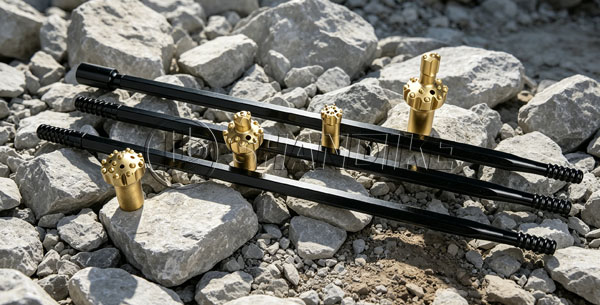
Types of Top Hammer Drill Rods
Selecting the right rod is crucial for success. The two most common types are MF (Male-Female) rods and Extension rods. Understanding their differences is key to making the right choice.
MF (Male-Female) Rods
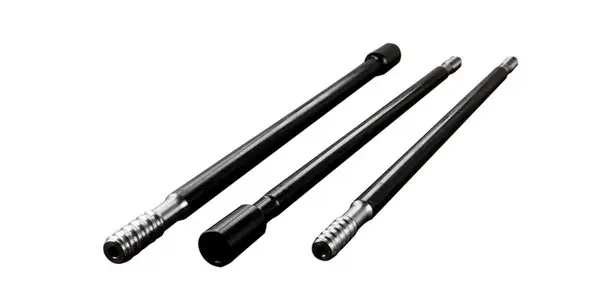
Structure & Design: An MF rod has a male (external) thread on one end and a female (internal) thread on the other. This allows rods to be directly connected to one another without a separate coupling sleeve.
Key Advantages:
- Higher Energy Efficiency: With fewer connection points, there is minimal energy loss during impact transfer, leading to better performance.
- Greater Stability and Rigidity: The direct rod-to-rod connection provides a more rigid drill string. This reduces vibration and helps maintain hole straightness, which is critical for precision drilling.
- Faster Handling: Quicker to connect and disconnect, improving overall productivity.
Limitations:
- Less flexibility in adjusting rod length compared to extension rods, as you are limited by the fixed lengths available.
- Typically have a higher initial cost.
Best Applications: MF rods are ideal for long-hole drilling, high-precision projects, and operations where hole deviation must be minimized.
Extension Rods
Structure & Design: An extension rod has male threads on both ends. To connect multiple rods and extend the drill string, a separate coupling sleeve is required.
Key Advantages:
- Maximum Flexibility: Drill string length can be easily and freely adjusted on-site by adding or removing rods with coupling sleeves. This makes them highly adaptable to projects with variable hole depths.
- Lower Initial Cost: The rods themselves are often less expensive than MF rods.
Limitations:
- Higher Energy Loss: Each connection point (the coupling sleeve) is a source of energy loss and potential instability.
- Increased Wear and Vibration: More joints can lead to higher vibration, increased wear on the threads and couplings, and a greater risk of connection failure.
Best Applications: Extension rods are a practical and cost-effective solution for step drilling, anchor bolt drilling, and general-purpose drilling where length flexibility is a priority.
Choosing the Right Rod: A Quick Decision Guide
The decision between MF rods and extension rods isn’t about which is superior, but which is right for your specific operation. Use this checklist to guide your decision:
- Drilling Depth:
- For holes deeper than 30 meters, MF rods are generally preferred for their superior energy transfer and stability.
- For shallow to medium-depth holes (<20-30m), extension rods are a flexible and cost-effective choice.
- Rock Conditions:
- In hard, abrasive rock formations, the rigidity and reduced vibration of MF rods are beneficial for extending thread life and maintaining performance.
- In softer or medium rock, extension rods may be perfectly sufficient and more economical.
- Budget & Long-Term Costs:
- If you have a limited upfront budget, extension rods are more attractive.
- If your focus is on minimizing long-term costs, reducing downtime, and maximizing efficiency, MF rods often provide a better return on investment despite a higher initial price tag.
- Compatibility: Always ensure the thread type (e.g., R32, T38, T45, T51) of your drill rods, shank adapters, and drill bits are perfectly matched to avoid thread damage and energy loss.
Innovations and Key Specifications
The technology behind top hammer drill rods is constantly evolving to meet the demands of modern drilling.
- Advanced Thread Systems: Leading brands continuously develop more robust thread systems with extended service life. For example, certain high-end products feature shoulder-driven thread designs that are fully compatible with standard systems, offering significant improvements in wear resistance and penetration rate, with field tests showing substantial increases in service life and total drilling meters compared to traditional solutions.
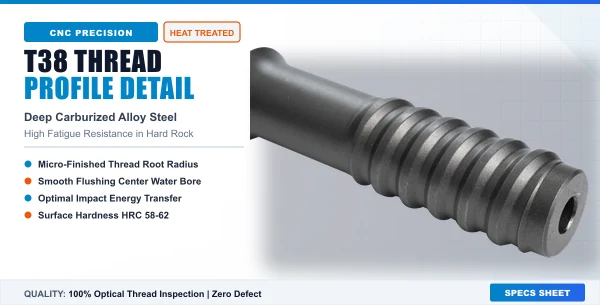
- Material and Construction: High-quality rods are manufactured from high-strength alloy steel, often using processes like carburizing or induction hardening to maximize fatigue resistance and service life. Common thread types and rod diameters include:
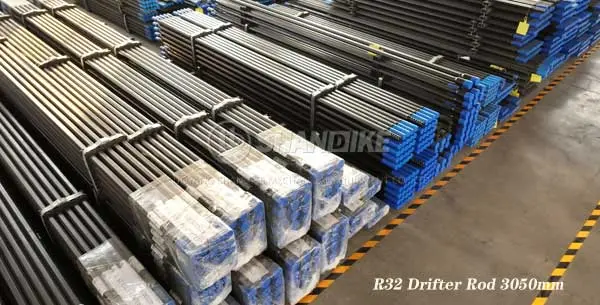
- Thread Types: R32, R38, T38, T45, T51, GT60.
- Shapes: Hexagonal (stiffer, better energy transfer) and Round (lighter, common in extension drilling).
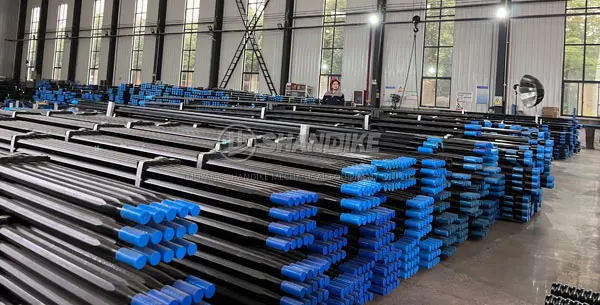
Among the many manufacturers, SHANDIKE stands out as a professional supplier of top hammer drilling tools, specializing in providing high-quality drill rod products for mining, quarrying, and tunneling projects. Its production base in Luoyang is equipped with advanced heat treatment and CNC machining production lines, offering products ranging from R22 to GT60 thread specifications, including both extension rods and MF rods. SHANDIKE holds ISO9001 quality system certification, with products exported to Australia, Canada, the United States, Southeast Asia, and other countries and regions, committed to helping customers reduce operating costs in complex working conditions.