H22 vs. H25 Tapered Drill Rod Selection Guide
1. Core Difference
Choosing between H22 and H25 tapered drill rods mainly depends on the rock drill model (shank size), impact energy, required hole diameter/depth, and rock hardness.
The essential difference lies in the rod body cross-section (hexagon across-flats width) and the shank specification: H22 means the hexagonal steel has an across-flats width of 22 mm, while H25 is 25 mm.
2. Key Performance Comparison
| Comparison Item | H22 Tapered Drill Rod | H25 Tapered Drill Rod |
| Hex Across-Flats Width | 22 mm | 25 mm |
| Common Shank Sizes | Hex 22×108 mm / Hex 22×159 mm | Hex 25×108 mm / Hex 25×159 mm |
| Applicable Rock Drills | Light/medium rock drills (e.g., YT24, YT28, Y26) | Heavy pneumatic/hydraulic rock drills (e.g., YSP45, YT29A or heavy drilling rigs) |
| Bending & Torsional Strength | Relatively lower; suited to small/medium power drilling | Higher (larger cross-section); withstands greater impact and torque |
| Recommended Hole Diameter | 30 mm – 42 mm | 38 mm – 50 mm and above |
| Optimum Drilling Depth | Shallow holes (generally 0.8 m – 5 m) | Medium–deep holes (can take longer rods and higher impact depth) |
| Weight & Labor Intensity | Lighter; convenient for one-man frequent rod changing (hand-held/air-leg) | Heavier; more advantageous for high-intensity continuous or mechanized drilling |
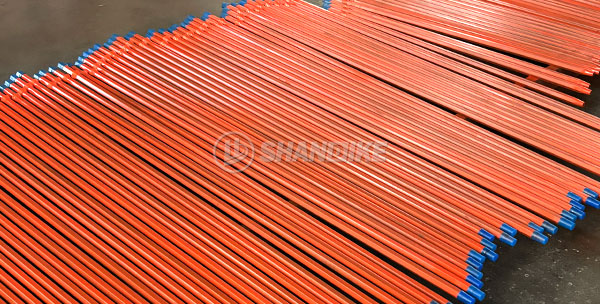
3. Selection Recommendations
3.1 Select by the Rock Drill Chuck (Primary Hard Condition)
The rod shank must match the rock drill chuck perfectly. If the machine uses a 22 mm chuck, only H22 can be selected; if it uses a 25 mm chuck, H25 is mandatory. Otherwise the rod cannot be installed, or excessive clearance may damage the chuck.
3.2 Select by Rock Hardness and Impact Energy
Choose H22 for medium-hard or slightly softer rock (e.g., shale, weathered rock, medium-hard granite). The air-leg rock drill (e.g., YT28) matched with H22 is the most common standardized combination in mining and tunneling.
Choose H25 for extremely hard, highly abrasive rock (e.g., very hard granite, basalt, iron ore). Heavy rock drills deliver strong impact; H22 is prone to bending or shank breakage, while H25, with a larger cross-section, transmits impact energy better and extends fatigue life.
3.3 Select by Target Hole Diameter and Depth
For small holes/shallow holes (e.g., quarry small holes, anchor bolt holes, 32–40 mm blast holes): prefer H22 — lighter and more cost-effective.
For large holes/deep holes (e.g., blast holes above 42 mm, drilling deeper than 4–5 m): prefer H25 — better rigidity, less prone to deviation (off-hole), and better flushing of cuttings.
4. Summary Selection Rule
First, determine the shank by the rock drill model; then determine the rod body by rock hardness and hole diameter. If the machine allows and the working conditions involve high intensity, large holes, or extremely hard rock, H25 will deliver significantly better anti-breakage performance and service life than H22.